
Everyone wants AI, few are ready for it
AI has moved rapidly from an emerging technology to boardroom priority. Across the wealth management industry, firms are exploring how AI can improve operational efficiency, enhance adviser productivity, strengthen decision-making and deliver more personalised client experiences.
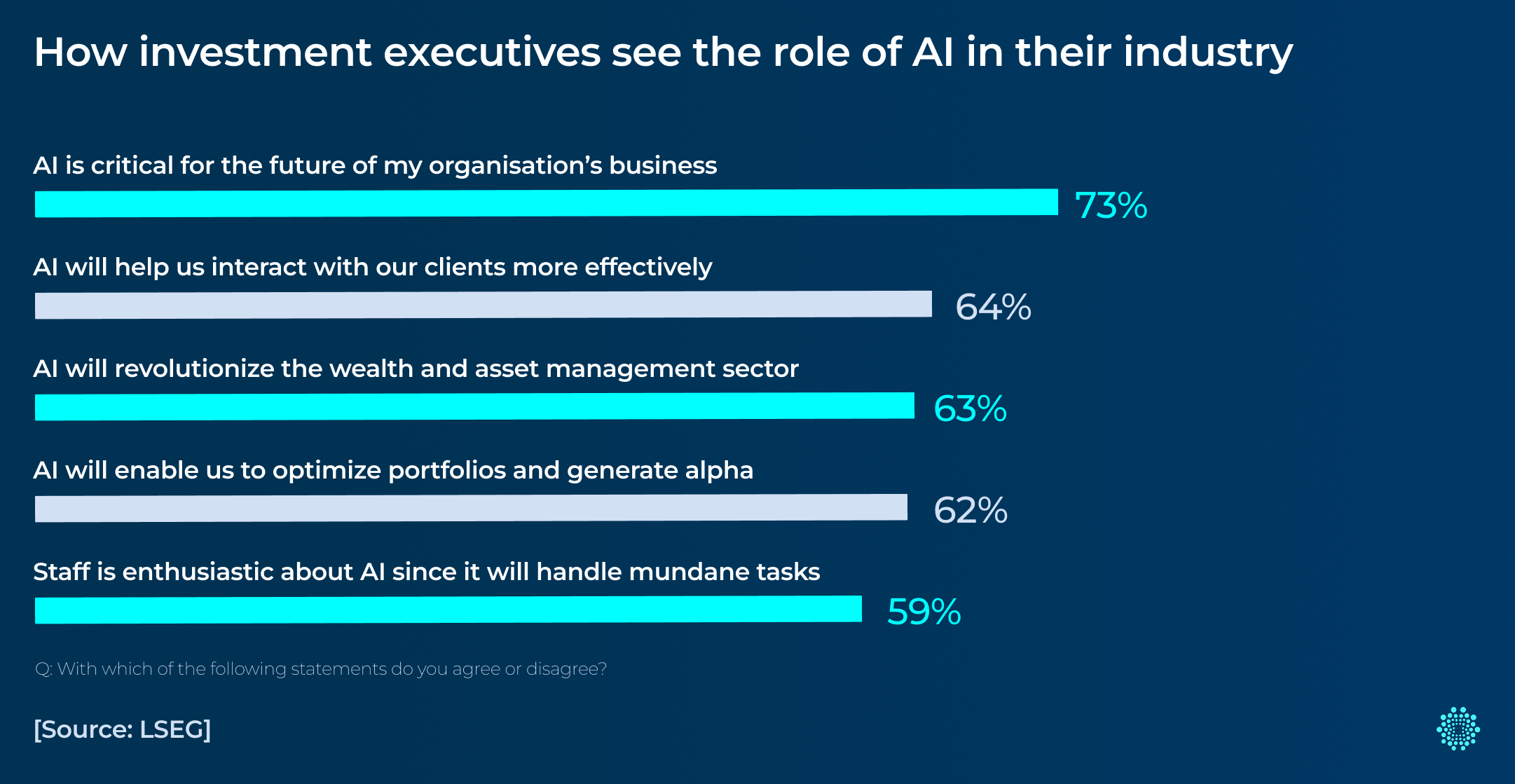
According to the 2026 MSCI Wealth Trends Report, only 13% of wealth managers are using AI today, but 95% plan to increase investment in AI over the next three years. Given the state of play, perhaps unsurprisingly, similar research from LSEG found that almost three quarters of wealth and asset management executives consider AI critical to the future success of their organisations.
Wealth and asset managers are operating in an increasingly complex environment, characterised by growing regulatory obligations, margin pressure, rising client expectations and an ever-expanding volume of data. AI has the potential to help firms navigate these challenges by automating routine tasks, uncovering hidden insights at great speed, improving reporting processes, and enabling advisers to spend more time on high-value client interactions.
But while AI may be at the top of many strategic agendas, far fewer firms are asking a more important question: is their data foundation ready for AI?
AI doesn’t just expose data problems, it amplifies them
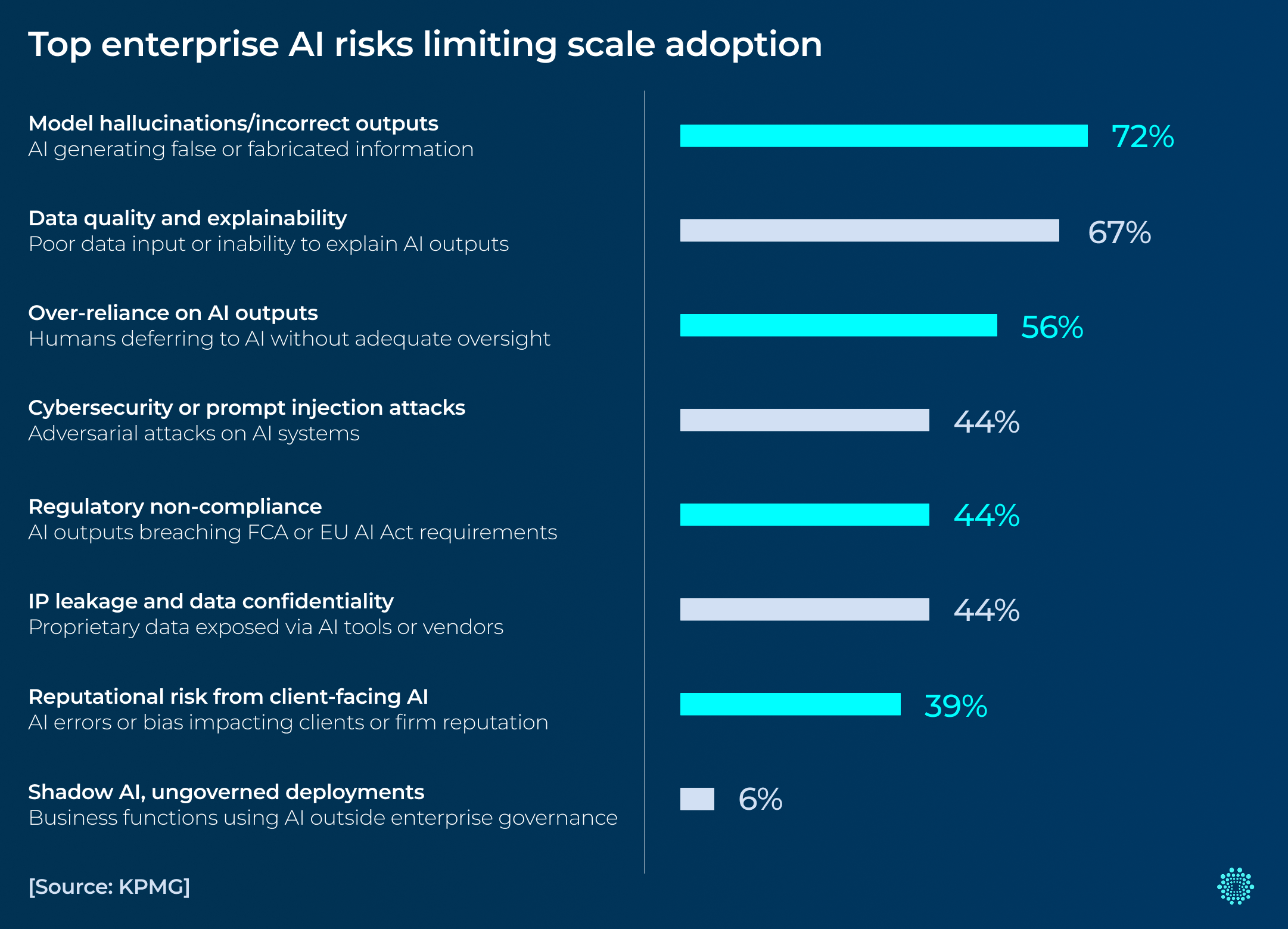
Research by KPMG found that model hallucinations were ranked as the number one risk limiting AI adoption by wealth managers, closely followed by concerns around data quality and explainability. The findings highlight an important reality: while the majority of an organisation’s attention is often focused on AI models themselves, the greatest risks to AI initiatives frequently originate in the data that lies beneath them.
For wealth managers, data integrity, quality and security are not just technical considerations. They are fundamental to maintaining regulatory compliance, protecting client trust and ensuring confidence in investment decisions. Missteps can have significant consequences, ranging from operational inefficiencies to reputational damage and regulatory scrutiny.
To generate reliable insights and automation, AI systems require data that is accurate, complete, timely and properly governed. Yet many wealth management firms continue to rely on complex estates of legacy platforms, spreadsheets and disconnected data sources.
LSEG’s latest global wealth report found that half of wealth management firms still lack robust processes to cleanse, normalise and enrich their data, or to integrate trusted external sources. When those inconsistencies exist, AI does not solve the problem. It scales it.
An adviser working from inaccurate client information may make a poor decision. But an AI system operating across thousands of records can replicate and amplify those errors in seconds. As firms increase their investment in AI, these underlying data weaknesses become increasingly difficult to ignore.
Before AI can deliver value, data must be trusted
If firms want AI to produce reliable outcomes, they must first establish trust in the data that powers it.
A trusted data foundation ensures that information is accurate, consistent, well-governed and accessible to the right people across an organisation. It provides confidence that critical decisions can be relied upon, whether that data is being used for regulatory reporting, operational streamlining, client servicing or business analysis.
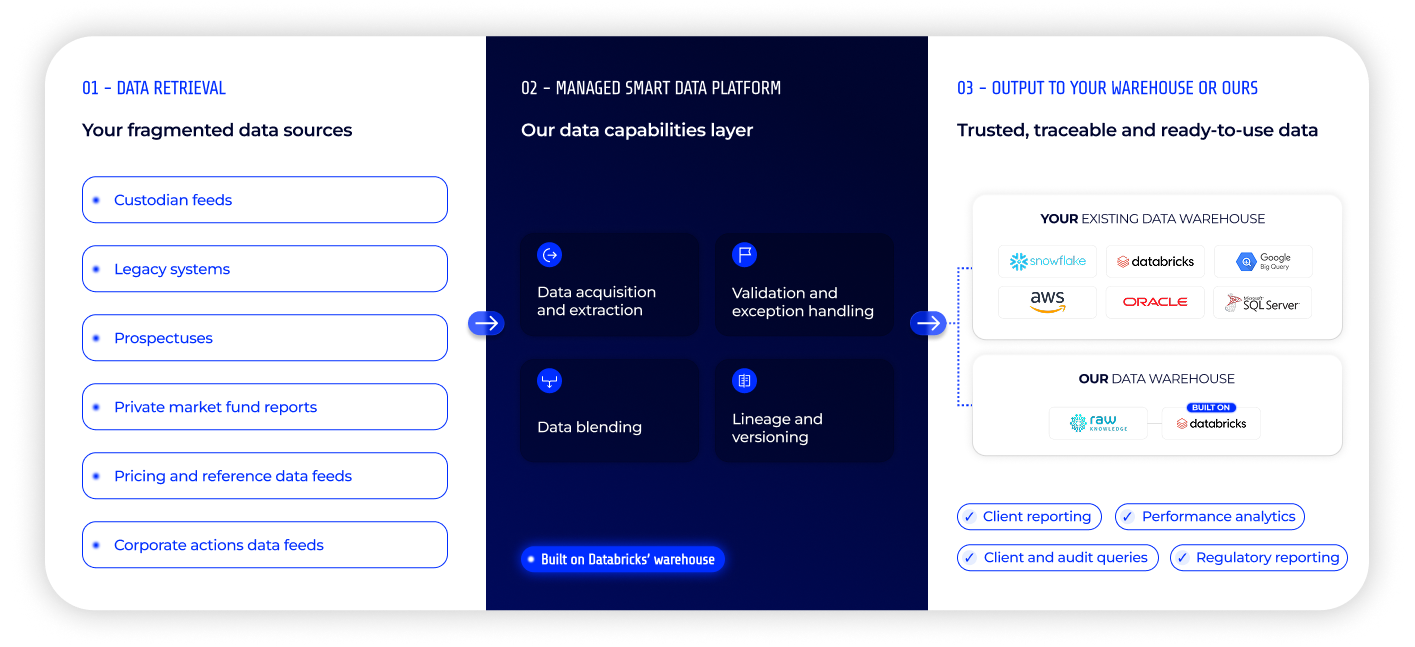
The Managed Smart Data Platform helps wealth and asset managers bring together disparate data sources from across their business into a clean, consistent source of truth. It automatically standardises, validates and reconciles data before delivering a trusted, unified dataset to a business’s data warehouse or lakehouse. Data lineage processes, ownership controls and complete auditability are also embedded within the platform, helping firms understand where data originates, how it has been transformed and how it is being used within the business. This helps provide confidence in every dataset and transparency for all users.
By creating a clear, consistent and reliable data foundation, the Managed Smart Data Platform helps businesses reduces dependence on manual reconciliation, lower their operational risk and create a stronger foundation for future AI innovation.
AI winners will be defined by their data
AI is set to play an increasingly important role in the future of wealth management, impacting everything from adviser enablement and operational efficiency to client service and investment decision support.
The long-term winners of AI in wealth management are unlikely to be determined by who adopts the technology first or who deploys the latest model, however. The real differentiator will be data. More specifically, it will be the ability to provide AI with data that is trusted, connected, and well-governed. This is why AI readiness cannot be viewed as purely a technology initiative. AI requires a foundation that combines robust governance, high-quality data management and a clear understanding of business context. Without that basis, AI risks becoming another isolated investment that struggles to deliver lasting value.
As the industry continues its AI journey, one thing is becoming increasingly clear: before wealth management can become AI-enabled, it must first become data-ready. And that starts with building a trusted foundation.